
Trace Crawford County Former Owners Through the Records
Start at the newest reliable deed. A backward ownership search in Crawford County follows each seller back to an earlier purchase. The Register of Deeds keeps deeds, mortgages, releases, plats, liens, and easements. The office sits at the courthouse in Girard. The county's genealogy material identifies alphabetical deed and mortgage listings beginning in 1870. That floor matters. It does not prove how far the commercial online index reaches. Crawford County publishes no earliest year for Tapestry or Laredo. Treat online results as one segment of a longer record trail.
| Source | Years It Covers | Where Held | What It Shows |
|---|---|---|---|
| Tapestry or Laredo index | Online starting year not verified | Register of Deeds online services | Grantor, grantee, document and recording leads |
| Alphabetical land listings | Beginning in 1870 | County genealogy resources | Deeds, mortgages and miscellaneous records |
| Deed and plat books | Older record eras | Register of Deeds counter | Recorded legal descriptions, transfers and additions |
| Local-history sources | 1894-1970 in KSHS Collection 678 | KSHS and Pittsburg Public Library | Name, street and community clues for a record search |
Online indexes handle recent transfers well. When the chain crosses the unknown online cutoff, switch to the county genealogy guide. Head to the courthouse counter next. A newspaper notice or library history can hint at a spelling or date. Only the recorded instrument establishes the transfer shown in the land records.
Walk Back from the Latest Crawford Deed
Pull the current CIC parcel card first. Copy the exact Owner's Name, parcel number, legal description, and any deed-number links. Search that owner as grantee in the recorder index. That deed's grantor is normally the prior owner. Search that person or entity as grantee to reach the deed conveying the same legal description. Repeat the loop, logging recording date, instrument type, book and page or instrument number, and the complete legal description each time.
| Transfer date | Grantor to grantee | Instrument | Reference to save |
|---|---|---|---|
| Newest first | Seller to present grantee | Warranty, quitclaim or other deed | Instrument or book/page |
| Previous | Earlier seller to that grantor | Acquisition deed | Matching legal description |
| Earlier era | Names from the reverse index | Deed-book entry | Book, page, plat and lot |
A same-name match is not enough. Confirm the parcel through the legal description, spouse or entity names, deed references, and adjoining plat context.
Crawford County's 1870 Genealogy Starting Point
The Register of Deeds genealogy collection begins its alphabetical listings in 1870. It reaches deeds, mortgages, miscellaneous records, old school files, and cemetery listings. The range is broad. That year sets a documented historical floor. It does not prove every instrument is indexed online. The office accepts written requests. But staff warn that they are not researchers and a copy search can miss documents. Send names, approximate dates, instrument type, legal description, and book or page whenever possible.
Why 1870 matters: Crawford County was established in 1867. Railroad and mining growth soon created towns, additions, and mine camps. Many transfers sit under historical place names rather than modern street addresses.
Note: An 1870 listing date describes the genealogy holdings, not a guarantee of complete online deed images from that year.
When Tapestry and Laredo Stop Helping
The county describes Tapestry as pay-as-you-go access for occasional users. Laredo is its subscription route for daily users. Neither page lists an earliest indexed year. A missing former owner online does not mean the transfer never occurred. Ask the Register of Deeds for guidance. The relevant grantor and grantee index, deed book, mortgage book, plat book, or microfilm may require inspection at the counter or a request by mail or telephone.
Bring a chain worksheet to Girard. An address alone is not enough. The office at 111 East Forest Street lists weekday hours of 8:00 a.m. to 4:30 p.m. Older instruments yield quickly to an exact surname, a date range, an addition or section-township-range description, and a reference copied from a later deed.
The Tapestry entry illustrates the paid occasional-user route.
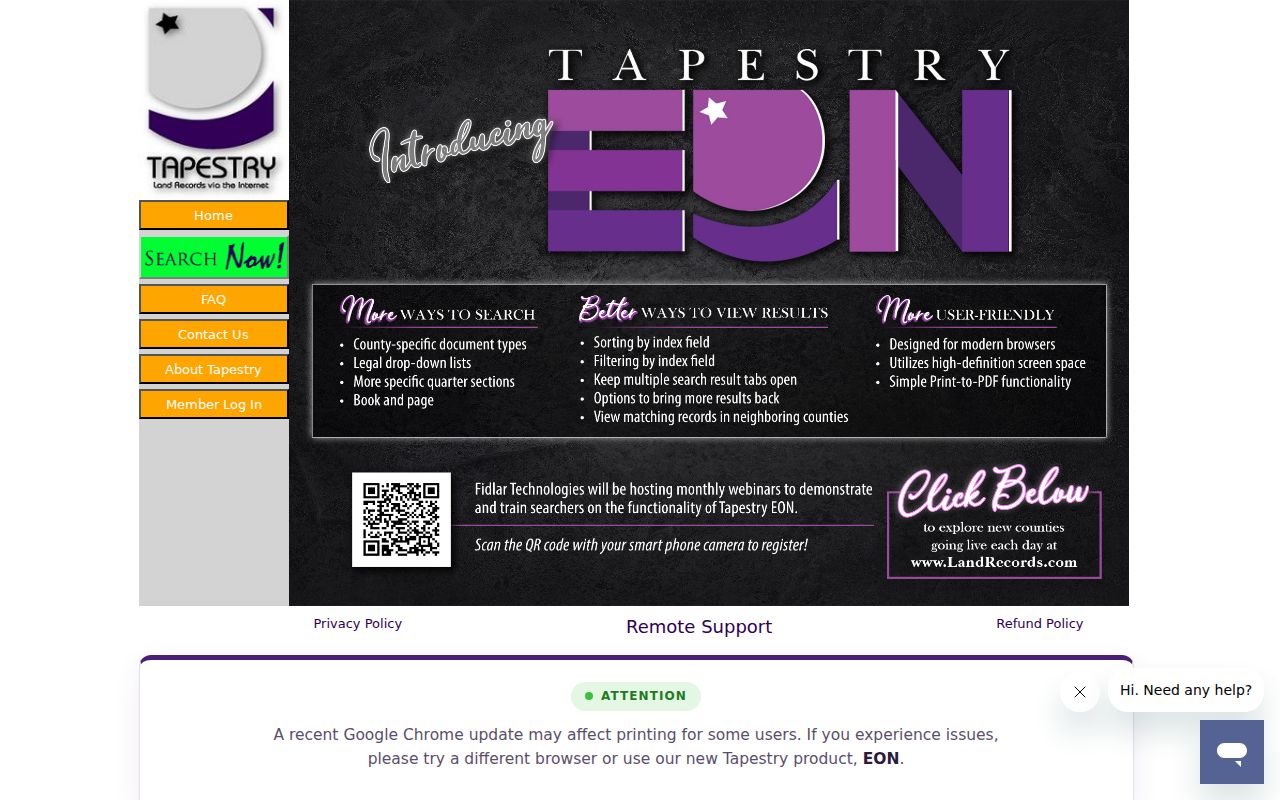
Its entry does not establish an earliest searchable year, so preserve the courthouse fallback.
Additions, Plats, and Changing Crawford Addresses
A street address is your least stable clue. In a long Crawford County property history, plat names hold up far better. Pittsburg agenda records mention Sunflower Estates, Sheridan Addition, Wellington Springs, Creekside East, and other plat leads. Frontenac's early land story ties its original plat to Cherokee-Pittsburg Coal Company Mine No. 1. Girard Ordinance 1316 names Hull's Addition, South Girard, Perry's East Addition, Player's Subdivision, West Addition, Original Town, and Gaitskill's Addition. Exact names unlock owners when address searches fail.
Copy the addition name exactly. Locate the recorded final plat. Rural land needs its section, township, range, quarter, acreage, and right-of-way language kept word for word. Compare descriptions across every deed. A GIS outline or modern mailing label is not the historical legal description.
Estate Transfers Can Interrupt a Neat Chain
When an owner dies, the chain of title rarely continues with a simple sale. A deceased owner's name in the Crawford County deed records may point instead to a probate filing, a personal representative's deed, a death certificate, or an affidavit of estate transfer. The Register of Deeds FAQ advises filing a death certificate after an owner dies. That filing alone proves nothing about title. To close the gap, line up the deed index with the Eleventh Judicial District court record, any estate orders, and the conveyance that eventually moved the property out of the estate. Only then does the parcel's ownership story hold together.
Similar breaks come from trusts, corporations, public bodies, and married names that changed over time. Search initials and spelling variants in the property records before concluding anything. Anchor every match to the legal description rather than the name alone. The Kansas business search helps identify an entity named in a deed. It still cannot substitute for the recorded instrument held by the recorder.
Build a Crawford Former-Owner Worksheet
Give every transfer in your Crawford County deed chain its own row. For each one, log the instrument date and the recording date separately. Then log the grantor and grantor's counterpart, the grantee. Spell each exactly as the recorder indexed them. Add the deed type and the instrument number or book and page. Include the legal description and the source you consulted. Leave room for a question column. Mismatches matter. A changed acreage figure, a shortened addition name, or a missing spouse often explains why one property search fails. So can an estate designation, a trust name, or a corporate suffix. Two similar names are still two people. Never merge them without proof.
Record the misses as carefully as the hits. Note the name form, date range, portal, and search mode that returned nothing. That discipline saves you from repeating a dead-end parcel search. It also hands Register of Deeds staff a precise starting point. Watch for legal descriptions that shift between deeds. Before continuing backward, find the cause of the change. It might be a lot split, replat, right-of-way deduction, street vacation, or partial conveyance. A parent tract's owner of record is not automatically the former owner of every later parcel carved from it.
A parcel number ties together the CIC, tax roll, and GIS map material nicely. Older Crawford County deed books, though, may predate that identifier entirely. When the parcel number runs out, fall back on the stable keys. Use the names themselves, book and page references, the addition and lot or block, or the section-township-range description.
Use Crawford Archives Without Confusing Evidence
Some problems sit outside the deed index. The Pittsburg Public Library genealogy collection, the Crawford obituary index, and the Morning Sun and Girard City Press archive can surface what a grantor index cannot. Newspapers may reveal a probate notice, a sheriff's sale, a street name, a spouse, a business, or a subdivision spelling. Obituaries may name heirs and married surnames. A county history can tie a mine camp or vanished town to a modern location.
Treat these as discovery sources, not conveyances. A newspaper sale notice does not prove the sale was confirmed. A listed heir does not prove title vested in that person. A historic address does not prove the modern parcel. Every clue must return to an official instrument: a deed, a probate order, a tax-foreclosure confirmation, or a recorded plat. For ownership that passed through court, save the case number and the final order, then hunt for the instrument recorded afterward in the Crawford County property records.
Read the Crawford County Deed Chain in Reverse
Start from a confirmed recent deed and work toward earlier owners. Never build the chain forward from an unverified historical name. That discipline keeps the same Crawford County parcel description anchored at the center of every step.
- Find the current owner's acquisition deed, with that owner shown as grantee.
- Copy the grantor's exact name and the complete legal description.
- Search that grantor as an earlier grantee and verify the parcel description.
- Repeat until online coverage ends, then carry the last book/page reference to the deed books.
- Grantor / grantee
- The conveying party and the receiving party named in an instrument.
- Chain of title
- The linked sequence of recorded transfers affecting the same land.
- Reverse index
- An index used to locate a prior acquisition under the grantee's name.
- Quitclaim / warranty deed
- Different deed forms; neither label alone resolves every title question.
How Far Back Crawford County Ownership Records Reach
Documented county genealogy listings reach back to 1870. The online recorder cutoff is unverified. Older or non-indexed property records may take you to deed books, grantor and grantee indexes, patents, plats, surveys, tax material, and courthouse assistance. Two archives can fill in names and historical context. These are the Kansas Historical Society's Crawford County History Collection, covering 1894 through 1970, and the Pittsburg Public Library genealogy holdings. Treat both as leads. The legal event itself always lives in the official deed or court record.
Use the record trail responsibly. Former-owner research supports house history, estate work and purchase diligence. It must never be used to stalk, threaten or harass a living person.